Electric Trike vs Mobility Scooter: Which Is Better for Seniors?
Compare electric trikes and mobility scooters for seniors: stability, comfort, exercise, range, speed, terrain, cargo, storage, and everyday lifestyle. Find the right active mobility choice.
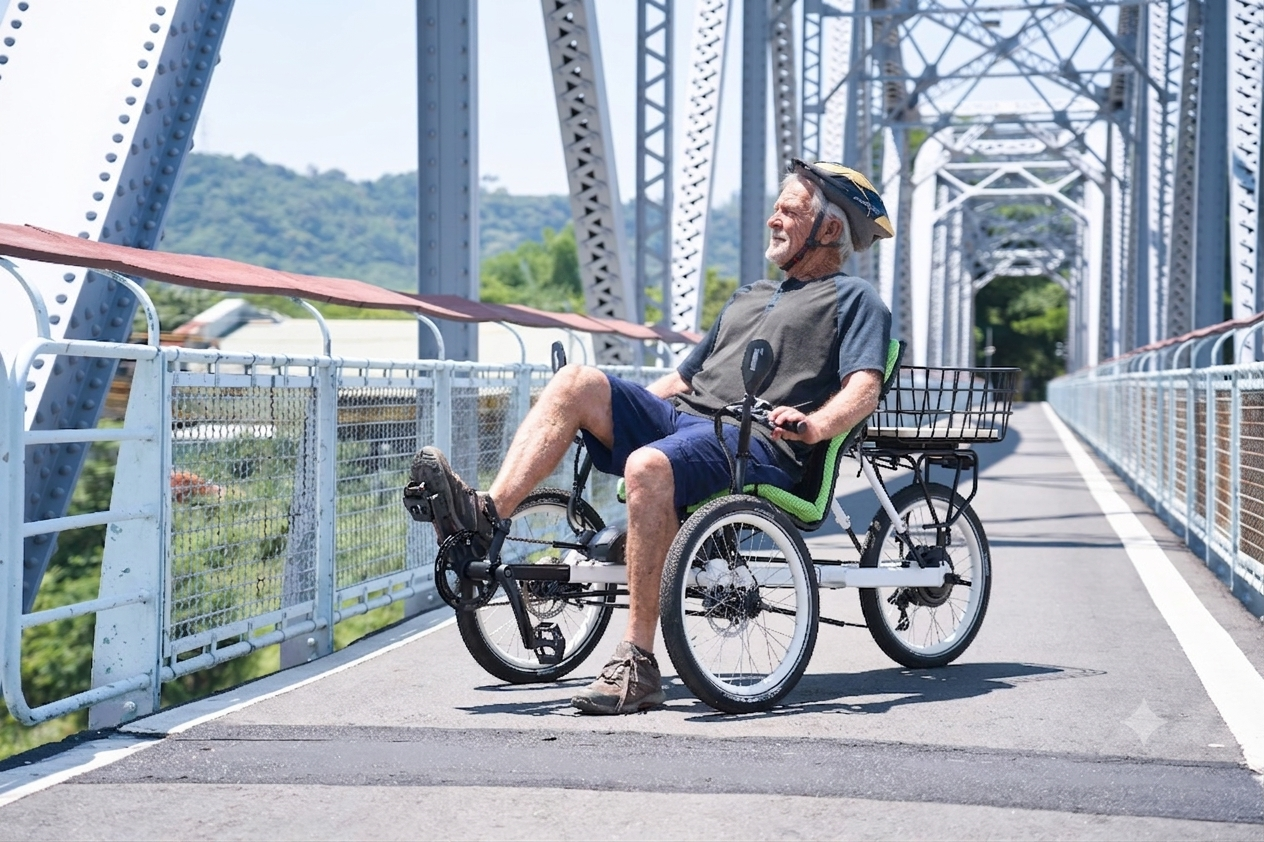
If you're looking for a better way to get around as you get older, two options often come up: electric trikes and mobility scooters. Both can help older adults travel farther, spend more time outdoors, and maintain greater independence. But they are designed for different purposes.
An electric trike is essentially a three-wheeled bicycle with electric assistance. A mobility scooter is a motorized mobility device designed primarily to transport a person while seated. So which one is better for seniors? The honest answer is: it depends on what you need your vehicle to do.
If you still enjoy pedaling, want to stay active, and primarily need help with balance, hills, distance, or riding comfort, an electric trike may be an excellent alternative to a traditional bicycle. If you need transportation with little or no physical effort, especially for short trips or mobility assistance, a mobility scooter may be the more appropriate choice.
Electric Trike vs Mobility Scooter: Quick Comparison
Here is a side-by-side look at how the two vehicles differ across the features that matter most to senior riders.
- Wheels: Electric trikes have 3 wheels; mobility scooters usually have 3 or 4.
- Pedaling: Electric trikes require pedaling with electric assistance; mobility scooters do not.
- Balance while stopped: Both are stable on three or four wheels.
- Physical activity: Electric trikes provide active exercise; mobility scooters provide minimal physical activity.
- Riding position: Electric trikes use bicycle or recumbent seating; mobility scooters use a chair-style seat with a tiller.
- Outdoor recreation: Electric trikes excel on suitable routes; mobility scooters are more limited depending on model.
- Bike trail access: Depends on local rules and vehicle classification for both.
- Indoor use: Electric trikes are usually limited outdoors; many scooters are better suited for indoor spaces.
- Long recreational rides: Electric trikes are excellent for many riders; scooters depend on model and terrain.
- Cargo: Electric trikes often support baskets, racks, and trailers; scooters commonly include a front basket or storage.
- Portability: Electric trikes are often larger; many scooters fold or separate for transport.
- Handling: Electric trikes handle bicycle-like; scooters use scooter-style steering.
- Best suited for: Electric trikes fit active transportation and recreation; scooters fit mobility assistance and convenient transportation.
There is no universal winner. The best choice depends on your physical ability, riding goals, terrain, distance, and lifestyle.
What Is an Electric Trike?
An electric trike, also called an e-trike, electric tricycle, or electric three-wheel bike, combines a three-wheel platform with an electric motor and battery. Unlike a traditional bicycle, an electric trike does not require the rider to balance on two wheels. Depending on the design, the rider may sit upright or in a recumbent position.
A recumbent electric trike places the rider in a more reclined position with a supportive seat and the legs positioned forward. This design can be particularly appealing to riders looking for a more relaxed riding position, three-wheel stability, comfortable seating, electric pedal assistance, longer recreational rides, everyday transportation, and cargo capacity.
An electric trike is still a cycling vehicle. The rider pedals while the motor provides assistance. That distinction becomes very important when comparing an e-trike with a mobility scooter.
What Is a Mobility Scooter?
A mobility scooter is designed primarily to provide powered transportation for people who have difficulty walking or need assistance covering longer distances. The rider sits in a chair-style seat and controls the vehicle using handlebars or a tiller. Unlike an electric trike, the rider does not need to pedal.
This makes a mobility scooter particularly useful for people who want or need minimal physical effort, easy seated transportation, short-distance mobility, shopping trips, community transportation, indoor mobility in suitable environments, and a vehicle focused primarily on transportation. Mobility scooters come in many configurations, including compact travel models, three-wheel models, and larger four-wheel models.
The Biggest Difference: Active Mobility vs. Powered Mobility
The most important difference between an electric trike and a mobility scooter is not the number of wheels. It is how you use your body. An electric trike is an active mobility vehicle with electric assistance. A mobility scooter is primarily a powered transportation vehicle.
With an electric trike, you can pedal as much as you comfortably want while the motor assists you. You can think of the motor as a helper. It can make hills easier, reduce the effort required to accelerate, help you travel farther, and allow you to continue cycling when a traditional bicycle becomes too demanding.
A mobility scooter takes a different approach. You sit, operate the controls, and the motor moves the vehicle. Neither approach is inherently better. They simply solve different problems.
Electric Trike vs Mobility Scooter for Seniors
For older adults, the decision often comes down to one important question: "Do I still want to ride, or do I primarily need transportation?" If you still enjoy cycling, an electric trike can provide a way to continue riding with electric assistance. If your main goal is simply to get from one location to another with minimal physical effort, a mobility scooter may make more sense.
1. Which Is More Stable?
Both can provide a stable platform compared with a traditional two-wheel bicycle. An electric trike has three wheels, allowing it to remain supported when stopped. This can be especially useful for riders who are uncomfortable balancing a conventional bicycle at intersections or during slow-speed riding.
However, riders should understand that three-wheel stability does not mean a trike behaves exactly like a mobility scooter. An electric trike may travel faster and handle more like a bicycle. Riders need to learn how the trike behaves during turning, braking, descending hills, uneven surfaces, and slow-speed maneuvering. A mobility scooter generally has a different steering and handling characteristic. For either vehicle, proper training and familiarization are important.
2. Which Is More Comfortable?
Comfort depends on the design of the vehicle and the rider. Mobility scooters typically use a chair-style seat with a backrest. Electric trikes can use either traditional bicycle seats or larger recumbent seats. A recumbent electric trike can provide a particularly different riding experience.
Instead of sitting upright, the rider reclines into the seat. This can provide back support, a relaxed riding position, a larger seating surface, less pressure on the hands, and a comfortable position for longer rides. For riders who want to spend an hour or several hours outdoors, seating position can become just as important as motor power.
3. Which Is Better for Exercise?
This is one of the clearest differences. An electric trike allows the rider to pedal. The amount of effort can vary. You can pedal more when you feel strong, use more motor assistance when you are tired, and reduce assistance when you want more exercise. This makes an electric trike a potentially flexible way to combine transportation and physical activity.
A mobility scooter is different. The vehicle moves using its motor, so the rider does not need to pedal. If your goal is to remain physically active while still having electric assistance available, an electric trike may be more appealing. However, if physical exertion is difficult or inappropriate for you, a mobility scooter may be the better choice.
4. Which Is Better for Longer Rides?
This depends on the specific vehicle, battery, terrain, rider, and route. But the type of vehicle changes the experience. An electric trike is designed around cycling. That makes it naturally suited to recreational rides, parks, suitable trails, neighborhood exploration, and longer outdoor trips where permitted.
A mobility scooter is primarily designed around transportation. Some larger mobility scooters can travel substantial distances, but their intended use and access can differ from bicycles and electric trikes. Before planning a long ride, always check battery range, terrain, charging availability, local regulations, trail access, weather, and emergency plans. Never rely solely on an advertised maximum range.
5. Electric Trike vs Mobility Scooter for Hills
Hills are another important consideration. Electric trikes can use motor assistance to help riders climb hills while continuing to pedal. Actual hill performance depends on motor characteristics, battery charge, rider weight, cargo weight, gear selection, hill grade, wind, tire pressure, and riding speed.
Mobility scooters can also handle hills, but their performance varies significantly by model. When comparing vehicles, don't simply look at the motor wattage. Consider the entire system. A vehicle that delivers smooth and predictable assistance may provide a better experience than one that simply has a larger advertised motor.
6. Which Is Better for Outdoor Recreation?
This is an area where an electric trike can be particularly attractive. Imagine a weekend ride: home to park to scenic trail to coffee shop and back home. An electric trike can turn the trip into a recreational cycling experience. You are not simply being transported. You are participating in the ride.
A recumbent electric trike can make this experience even more appealing for riders who prefer a relaxed seating position. Mobility scooters can certainly be used outdoors, but their suitability depends on the model, terrain, route, and local access rules.
7. Which Is Better for Grocery Shopping?
Both can be useful. Many electric trikes can accommodate rear baskets, front baskets, cargo racks, bags, and trailers. Mobility scooters commonly feature front baskets or other storage options. The important question is not simply how much storage is available.
Consider how much you normally carry. A rider who regularly visits a farmers market may want significantly more cargo capacity than someone who only carries a small personal bag. Always stay within the manufacturer's recommended payload limits.
8. Which Is Better for Dog Owners?
This is an increasingly interesting use case for electric trikes. A suitable electric trike can potentially be configured for riding with a dog, provided the vehicle and cargo system are designed for the intended weight. For dog owners, an electric trike may provide an opportunity to combine outdoor recreation, transportation, and time with your dog.
However, safety comes first. Before carrying a dog, consider total vehicle payload, dog weight, cargo attachment, center of gravity, braking distance, dog restraint, rider control, and local regulations. Never assume that a standard basket is designed to carry a pet.
9. Which Is Easier to Transport?
This is one area where mobility scooters can have an advantage. Many compact mobility scooters are designed to separate into multiple pieces or fold for transportation. Electric trikes are often larger. Depending on the model, transporting an e-trike may require a suitable bike carrier, a hitch-mounted rack, a trailer, or a vehicle with sufficient cargo space.
Before purchasing an electric trike, measure your garage, storage area, doorways, vehicle, and transport equipment. The best vehicle is one that you can realistically store and transport.
10. Which Is Better for Indoor Use?
Mobility scooters generally have an advantage when indoor mobility is a major priority. Compact models can be designed for environments such as shopping centers, large stores, indoor facilities, airports, and other accessible locations. Electric trikes are generally designed more around outdoor cycling. Their width and turning characteristics may make them less convenient indoors.
If your primary need is moving around inside buildings, a mobility scooter may be the more appropriate solution.
11. Electric Trike vs Mobility Scooter for Independence
Both can increase independence, but they provide independence in different ways. A mobility scooter can help someone travel when walking long distances is difficult. An electric trike can help someone continue participating in cycling and outdoor activities while receiving electric assistance.
For some riders, that difference is important psychologically as well as physically. There is a difference between "I need a mobility device" and "I have a vehicle that lets me keep riding." Neither is better for everyone. The right choice is the one that supports the life you want to live.
12. What About Safety?
Safety should never be reduced to a simple statement such as "Trikes are safer" or "Scooters are safer." The actual answer is more complicated. Different vehicles create different handling characteristics and operating environments.
When evaluating an electric trike, consider braking performance, steering response, center of gravity, wheelbase, tire size, lighting, visibility, rider position, weight distribution, and turning behavior. When evaluating a mobility scooter, consider stability, turning radius, speed control, braking, seat support, visibility, weight, and terrain capability. The safest vehicle is the one that matches the rider's abilities and intended environment and that the rider understands how to operate.
13. Electric Trike vs Mobility Scooter: Which Has Better Range?
Range depends heavily on the individual model. For either vehicle, advertised range can change according to rider weight, cargo, speed, terrain, wind, temperature, tire pressure, battery condition, and assistance level. Instead of asking which vehicle has the longest range, ask how many miles you actually need.
If your typical trip is 5 miles, you may not need an extreme-range vehicle. If you regularly want to ride 20, 30, or more miles, battery capacity and charging strategy become much more important.
14. Which One Is Better for Active Seniors?
If you are an active senior who still enjoys cycling, wants to spend time outdoors, wants electric assistance, wants three-wheel stability, enjoys recreational rides, wants to carry groceries or gear, and wants a more comfortable riding position, then an electric trike may be worth serious consideration. A recumbent electric trike can be especially interesting for riders who prioritize comfort.
15. Which One Is Better for Seniors With Limited Mobility?
This is where the answer changes. If you cannot comfortably or safely pedal, an electric trike may not be the right solution simply because it has three wheels. An electric trike is still a bicycle-style vehicle. You should consider your ability to mount and dismount, pedal, steer, brake, control the vehicle, and react to changing conditions.
If your primary need is powered mobility with minimal physical effort, a mobility scooter may be more appropriate. If you're unsure, consider speaking with a qualified healthcare or mobility professional who can evaluate your individual needs.
16. Electric Trike vs Mobility Scooter: Which Is More Fun?
This may sound like a strange question, but it matters. A mobility scooter is primarily transportation. An electric trike can feel more like recreation. You can ride through a park, explore a neighborhood, visit a trail, go to a farmers market, take your dog for an outing, or meet friends for a ride.
That difference can influence how often you actually use the vehicle. The best mobility solution is not necessarily the one with the longest list of features. It is the one that makes you want to go outside.
Electric Trike vs Mobility Scooter: Which One Should You Choose?
Here's a simple way to think about it.
Choose an Electric Trike If You:
- Still enjoy pedaling
- Want electric assistance
- Want three-wheel stability
- Want to stay physically active
- Enjoy outdoor recreation
- Want longer recreational rides
- Need practical cargo capacity
- Prefer a bicycle-style experience
- Want a recumbent seating option
Consider a Mobility Scooter If You:
- Want little or no physical exertion
- Have difficulty pedaling
- Primarily need transportation
- Frequently travel indoors
- Need a compact mobility solution
- Prefer a chair-style seating position
- Need a vehicle designed primarily around mobility assistance
And remember: you don't necessarily have to choose only one. Some people may benefit from a mobility scooter for specific mobility needs while using an electric trike for recreation and outdoor activities.
Electric Trike vs Mobility Scooter: The Bottom Line
So, which is better for seniors? The answer depends on what you are trying to accomplish. A mobility scooter can be an excellent choice when the primary goal is convenient transportation with minimal physical effort. An electric trike can be an excellent choice for people who still want to pedal, stay active, explore outdoors, carry cargo, and enjoy the experience of cycling while receiving electric assistance.
For many riders, the decision comes down to one simple question: Do you want transportation, or do you want to keep riding? If you want transportation with minimal physical effort, explore mobility scooter options. If you want to continue cycling with electric assistance, an electric trike may be the better fit. And if comfort is a major priority, a recumbent electric trike offers another option worth exploring.
Why OVELOX?
At OVELOX, we believe aging should not automatically mean giving up the freedom and enjoyment of cycling. Our focus is on creating electric recumbent trikes around the complete riding experience: comfort, stability, control, ergonomics, practical transportation, and outdoor freedom.
An OVELOX electric recumbent trike is designed for riders who want more than simply getting from Point A to Point B. It is designed for people who still want to experience the road, the trail, the neighborhood, the park, and the freedom of riding. Whether you are returning to cycling, looking for a more comfortable alternative to a traditional bicycle, or comparing an electric trike with a mobility scooter, start by identifying what you want your vehicle to help you do.
Your age doesn't define how you ride. Your lifestyle does.
Related OVELOX Guides
If you're still deciding which type of electric vehicle is right for you, continue exploring our guides on electric trikes versus electric bikes, how far an electric trike can really go, the best electric trike for seniors, recumbent versus upright trikes, tadpole versus delta recumbent trikes, and how to choose the right electric trike for long-distance riding.
Ready to Keep Riding?
The right vehicle should do more than move you. It should give you a reason to go outside, fit your lifestyle, feel comfortable, and help you keep doing the things you enjoy. If you are comparing an electric trike with a mobility scooter, start by asking what you want from the next chapter of your riding life. Transportation? Recreation? Exercise? Adventure? Independence? The answer may point you toward the right vehicle.
Explore OVELOX Electric Recumbent Trikes and discover a different way to ride.
Ride the difference yourself
OVELOX is a low step-through electric recumbent trike built for comfort, stability and pain-free long rides — designed with seniors and pet families in mind.
Contact OVELOXKeep reading
How Cycling Can Become Part of Your Weekend Routine
Learn how to build a sustainable weekend cycling routine with an electric recumbent trike. Discover route ideas, distance goals, safety checklists, and tips for seniors, pet families, and active-aging riders.
Electric Trike vs Electric Bike: Which Is Better for Seniors, Comfort & Stability?
Compare electric trikes and electric bikes for seniors, comfort, stability, cargo, and everyday riding. Discover which vehicle fits your body, terrain, and lifestyle — and why a recumbent e-trike may be the most confidence-inspiring choice.