Electric Trike vs Electric Bike: Which Is Better for Seniors, Comfort & Stability?
Compare electric trikes and electric bikes for seniors, comfort, stability, cargo, and everyday riding. Discover which vehicle fits your body, terrain, and lifestyle — and why a recumbent e-trike may be the most confidence-inspiring choice.
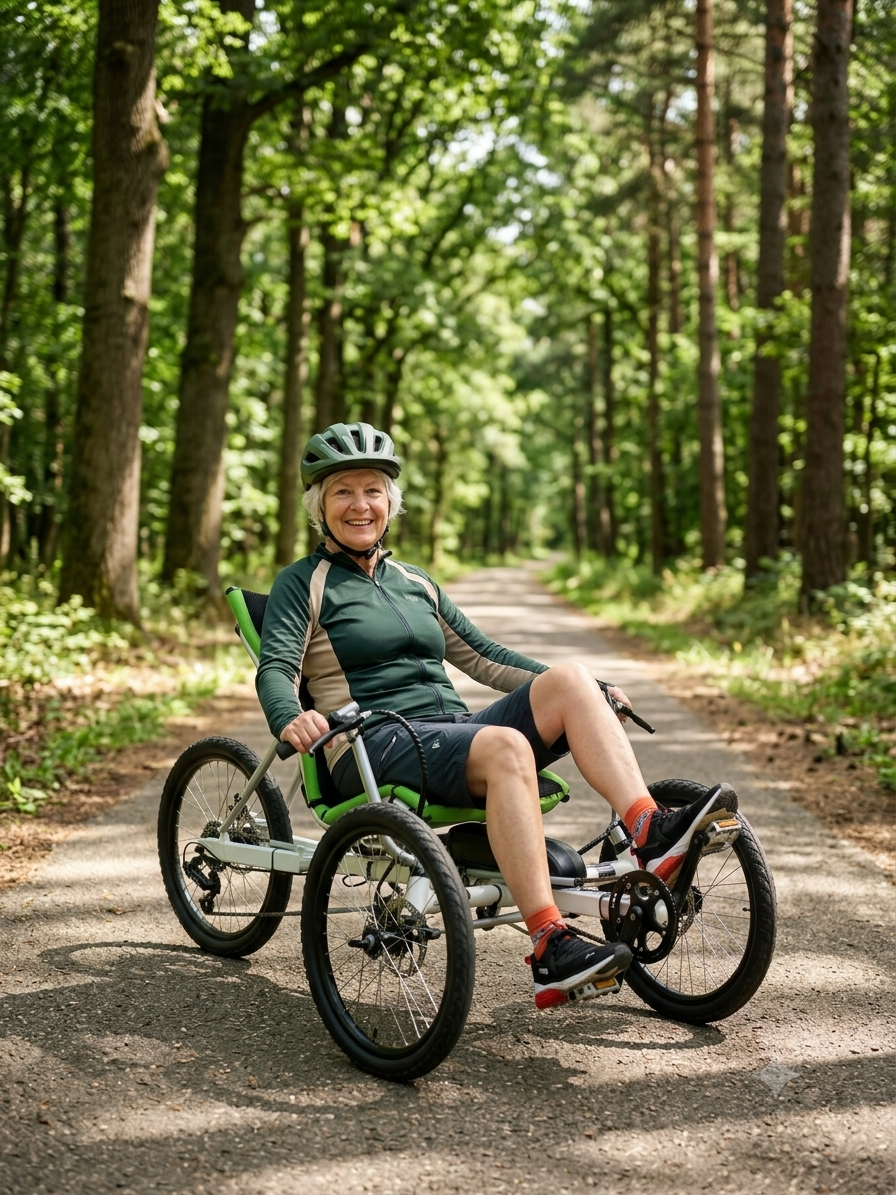
Choosing between an electric trike and an electric bike can be surprisingly difficult. Both can help you ride farther, climb hills with less effort, carry groceries, explore local trails, and enjoy cycling without relying entirely on your own strength. But they are designed for different riding experiences.
An electric bike (e-bike) has two wheels and requires the rider to maintain balance. An electric trike (e-trike or electric tricycle) has three wheels and can provide a more stable platform, particularly when starting, stopping, riding slowly, or carrying cargo.
For many riders, especially older adults and anyone who values comfort and stability, the better question is not which one is faster, but which type of electric vehicle fits the way you actually want to ride.
Electric Trike vs Electric Bike: Quick Comparison
- Number of wheels — Electric Trike: 3; Electric Bike: 2
- Balance at stops — Electric Trike: easier; Electric Bike: requires balance
- Low-speed confidence — Electric Trike: excellent for many riders; Electric Bike: requires more balance
- Comfort — Electric Trike: excellent with supportive designs; Electric Bike: depends on bike geometry
- Cargo capacity — Electric Trike: often higher; Electric Bike: usually lower
- Maneuverability — Electric Trike: wider turning profile; Electric Bike: more agile
- Stability while stopped — Electric Trike: strong advantage; Electric Bike: requires balancing
- Long-distance comfort — Electric Trike: excellent with recumbent designs; Electric Bike: depends on geometry
- Learning curve — Electric Trike: different steering/handling; Electric Bike: familiar to experienced cyclists
- Storage — Electric Trike: usually larger; Electric Bike: usually easier
- Best for — Electric Trike: stability, comfort, cargo, relaxed riding; Electric Bike: speed, agility, lightweight riding
There is no universal winner. The best choice depends on your body, riding environment, confidence, and what you want to do with the vehicle.
What Is an Electric Trike?
An electric trike is a three-wheeled cycle equipped with an electric motor and battery. You may also see them called:
- Electric tricycles
- E-trikes
- Electric three-wheel bikes
- Three-wheel electric bikes
- Electric recumbent trikes
Electric trikes come in several designs. Some have an upright bicycle-style seat. Others use a recumbent design, where the rider sits lower and leans back into a supportive seat. A recumbent electric trike can be especially attractive to riders who prioritize a relaxed riding position and long-distance comfort.
What Is an Electric Bike?
An electric bike is a two-wheeled bicycle equipped with an electric motor that assists the rider. E-bikes are generally lighter and narrower than electric trikes. That makes them attractive for riders who prioritize:
- Speed
- Agility
- Easy transportation
- Narrow bike paths
- Sportier riding
- Easy storage
However, a two-wheel electric bike still requires the rider to balance the bike, particularly when starting, stopping, turning slowly, or maneuvering in tight areas.
1. Electric Trike vs Electric Bike: Stability
This is one of the biggest differences. An electric bike requires continuous balance. An electric trike has three wheels, providing a wider base of support. This can make an electric trike attractive to riders who want more confidence when starting from a stop, stopping at intersections, riding slowly, carrying groceries, taking relaxed neighborhood rides, or riding on suitable multi-use paths.
However, three wheels do not automatically make every trike safer in every situation. Riders still need to learn how the vehicle behaves when turning, braking, and riding on slopes. A well-designed electric trike should be evaluated for steering response, braking performance, weight distribution, center of gravity, and overall handling.
2. Which Is More Comfortable?
Comfort depends heavily on the design. A traditional upright e-bike places the rider in a familiar bicycle position. A recumbent electric trike is different. The rider sits in a larger seat with the legs positioned forward. This can provide back support, a relaxed riding position, less pressure on the hands, a larger seating area, and a comfortable position for longer rides.
For riders who want to spend an hour or more riding at a relaxed pace, seating geometry can be more important than having the highest motor power.
3. Electric Trikes for Seniors
Electric trikes are often considered by older adults who want to continue cycling but are less comfortable with a traditional two-wheel bicycle. A senior rider may prioritize:
- Stability
- Comfortable seating
- Easy controls
- Predictable steering
- Reliable braking
- Easy mounting and dismounting
- Adequate motor assistance
- Good visibility
- Storage and transportation
A recumbent electric trike can provide an alternative to the traditional upright bicycle by combining three-wheel stability with a supported seating position. But age alone should never determine which trike someone should buy. A 65-year-old rider who wants to ride aggressively on hills may need something very different from an 80-year-old rider who wants a comfortable neighborhood vehicle. Choose based on riding needs — not age alone.
4. Electric Trike vs Electric Bike for Balance
If balance is your biggest concern, this is one of the most important differences to consider. With an electric bike, the rider must balance on two wheels. With an electric trike, the vehicle remains supported by three wheels. That can make stopping and starting feel fundamentally different.
For example, imagine riding to a local farmers market. On a traditional e-bike, you approach a stop, slow down, balance the bike, stop, put your foot down, and then accelerate again. On an electric trike, the vehicle can remain supported on three wheels while stopped. This can provide a different kind of riding confidence.
5. Which Is Better for Hills?
Both electric bikes and electric trikes can use electric motors to assist on hills. However, motor power is only one part of the equation. Actual hill performance can depend on:
- Rider weight
- Cargo weight
- Battery voltage
- Motor characteristics
- Gear selection
- Tire pressure
- Hill grade
- Riding speed
- Temperature
- Battery charge
- Wind
A larger motor does not automatically mean a better riding experience. For an electric trike, smooth power delivery can be especially important because the rider is controlling a larger three-wheeled vehicle. A good electric trike should provide predictable acceleration rather than simply maximum power.
6. Range: How Far Can an Electric Trike Go?
Range is one of the most common questions when shopping for an electric trike. The advertised range should never be treated as a guaranteed distance. Real-world range can change significantly depending on riding conditions. Flat pavement with a light rider and moderate assist may produce very different results from hills with a heavy rider, strong headwind, and high assist.
When comparing electric trikes, consider battery capacity as well as the manufacturer's stated range. For long-distance riders, it is better to have enough range for the planned trip plus a reasonable reserve.
7. Electric Trike vs Electric Bike for Carrying Cargo
This is another area where electric trikes can have a major advantage. Many electric trikes are designed around practical transportation. They can be equipped with rear baskets, front baskets, cargo racks, bags, trailers, and grocery storage. This makes an electric trike useful for everyday activities such as:
- Grocery shopping
- Farmers markets
- Picnics
- Beach trips
- Neighborhood errands
- Camping
- Pet transportation
Instead of thinking of an electric trike only as a recreational vehicle, consider whether it could become part of your everyday transportation.
8. Can You Ride an Electric Trike With a Dog?
For many dog owners, this is one of the most interesting possibilities. A suitable electric trike can potentially be configured for pet transportation, depending on the vehicle's weight limits, cargo system, and local rules. Before carrying a dog, always consider:
- Total payload
- Cargo attachment
- Center of gravity
- Dog size
- Dog behavior
- Braking distance
- Secure restraint
- Traffic conditions
Never assume that a basket or cargo rack is automatically designed to carry a pet. The equipment must be appropriate for the intended load. For dog owners, an electric trike can potentially turn a simple ride into a shared outdoor activity.
9. Recumbent Electric Trike vs Upright Electric Trike
Not all electric trikes feel the same. One of the most important design choices is the riding position.
Upright Electric Trike
The rider sits in a position similar to a traditional bicycle. Advantages can include a familiar riding position, good visibility, an easier transition for traditional cyclists, and practical cargo access.
Recumbent Electric Trike
The rider sits in a reclined position with the legs extending forward. Potential advantages include back-supported seating, a relaxed riding position, a low center of gravity, comfortable long-distance riding, and less pressure on the hands and wrists.
The right choice depends on your body and riding style.
10. Tadpole vs Delta Recumbent Trikes
If you are shopping specifically for a recumbent trike, you may encounter two common layouts.
Tadpole Trike
A tadpole trike has two wheels in front and one wheel in the rear. This configuration can provide a wide front stance and a low riding position.
Delta Trike
A delta trike has one wheel in front and two wheels in the rear. Delta designs can offer a different riding and mounting experience.
Neither configuration is automatically the best. The best design depends on the rider, terrain, steering system, seating position, and intended use.
11. Electric Trike Safety: What Should You Look For?
A three-wheel design does not eliminate the need for good riding technique. Before purchasing an electric trike, pay attention to:
- Braking: Look for reliable braking performance and controls that are easy to operate.
- Steering: The steering should feel predictable and controlled.
- Turning: Three-wheel vehicles behave differently from two-wheel bicycles when cornering. Practice wide turns before riding in traffic.
- Visibility: A recumbent rider may sit lower than riders on upright bicycles. Lights, reflectors, bright clothing, and flags can help improve visibility where appropriate.
- Tires: Choose tires appropriate for the surfaces where you plan to ride.
- Weight Distribution: Cargo placement can influence handling. Keep heavy items positioned according to the manufacturer's recommendations.
12. Electric Trike vs Electric Bike for Everyday Transportation
Ask yourself how you actually plan to use the vehicle. If your typical ride is home to coffee shop to park and back, an electric bike may be perfect. If your typical ride includes home, grocery store, farmers market, and park, an electric trike may make more sense.
- Long, comfortable recreational rides — a recumbent electric trike may be particularly attractive.
- Fast, lightweight commuting — an electric bike may be the better choice.
13. What About Transportation and Storage?
This is one area where electric bikes usually have an advantage. Electric trikes are generally wider and can take up more storage space. Before buying an electric trike, measure garage width, doorway width, storage area, vehicle opening, trailer or carrier requirements, and turning space. Do not buy based only on photographs. Measure the actual dimensions of the vehicle. This simple step can prevent a frustrating ownership experience.
14. How Much Should You Spend on an Electric Trike?
Price varies widely depending on motor, battery, frame, brakes, suspension, wheels, seat, cargo system, electronics, manufacturing quality, warranty, and dealer or service support. Instead of asking what is the cheapest electric trike, ask what you will actually use every week. A cheaper vehicle that is uncomfortable, difficult to store, or poorly matched to your riding needs may not be a good value.
The best value is the vehicle you will actually enjoy riding.
15. Who Should Consider an Electric Trike?
An electric trike may be worth considering if you prioritize three-wheel stability, comfortable seating, relaxed riding, cargo capacity, neighborhood transportation, longer recreational rides, electric assistance, and a more confidence-inspiring platform at stops.
It may be less suitable if you prioritize minimum weight, very tight maneuverability, high-speed sport riding, easy carrying up stairs, or extremely compact storage.
16. Who Should Consider an Electric Bike?
An electric bike may be a better fit if you prioritize lightweight transportation, narrower dimensions, faster handling, easy storage, sportier riding, traditional bicycle handling, and tight maneuverability. The key is matching the vehicle to your priorities.
The Most Important Question: What Do You Want Your Ride to Feel Like?
When comparing an electric trike with an electric bike, specifications can become overwhelming. 500W, 750W, 48V, 20Ah, 20 miles, 40 miles, fat tires, suspension, hydraulic brakes, mechanical brakes — those numbers matter, but they should not be the first thing you consider. Start with the riding experience.
- Do you want more stability?
- Do you want more comfort?
- Do you want more cargo capacity?
- Do you want longer relaxed rides?
- Do you want more confidence at stops?
- Do you want a supported seating position?
- Do you want a vehicle you can use for everyday errands?
Your answers will tell you much more about the right vehicle than a single motor specification.
Electric Trike vs Electric Bike: The Bottom Line
There is no single best electric vehicle for everyone. An electric bike is often the better choice for riders who prioritize lightweight handling, speed, agility, and compact storage. An electric trike can be a better choice for riders who prioritize stability, comfort, cargo capacity, and relaxed everyday riding. For riders looking for an even more comfortable experience, a recumbent electric trike combines three-wheel design with a reclined, supportive seating position.
The best electric trike is not necessarily the one with the biggest motor or the longest advertised range. It is the one that fits your body, your environment, your transportation needs, and the way you actually want to ride.
Why OVELOX Takes a Different Approach
At OVELOX, we believe an electric trike should be more than simply a bicycle with an extra wheel. It should be designed around the complete riding experience. That means thinking about comfort, stability, control, ergonomics, braking, handling, practical transportation, and long-distance riding.
Our goal is to create an electric recumbent trike that allows riders to spend less time worrying about the vehicle and more time enjoying the ride. Whether you're returning to cycling, exploring local trails, running errands, riding with your family, or simply looking for a more comfortable way to get outside, the right trike can change the way you experience cycling.
Frequently Asked Questions
Is an electric trike better than an electric bike for seniors?
It depends on the rider. Many older adults appreciate the three-wheel platform because it does not require the same balance at stops and low speeds as a two-wheel bicycle. Comfort, steering, braking, fit, and riding environment should also be considered.
Are electric trikes easier to ride than electric bikes?
They can be easier for riders who are uncomfortable balancing a two-wheel bicycle, particularly when stopped or traveling slowly. However, trikes have different steering and cornering characteristics, so new riders should practice before riding in traffic.
Are recumbent electric trikes comfortable?
Many riders choose recumbent trikes specifically for their supportive seating and relaxed riding position. Fit and seat adjustment are extremely important.
How far can an electric trike travel?
Range varies according to battery capacity, rider weight, terrain, speed, wind, temperature, tire pressure, and level of motor assistance. Manufacturer range figures should be treated as estimates rather than guarantees.
Can an electric trike go uphill?
Yes, electric trikes can assist riders on hills. Actual hill performance depends on motor characteristics, battery charge, rider and cargo weight, gearing, terrain, and grade.
Can I use an electric trike for grocery shopping?
Many electric trikes are designed with cargo capacity and can be useful for grocery shopping and everyday errands. Always stay within the manufacturer's payload limits.
Is an electric trike good for long-distance riding?
A comfortable recumbent electric trike can be well suited to longer recreational rides, especially when the seating position, fit, battery capacity, tires, and riding terrain are appropriate.
What is the difference between an e-trike and an electric tricycle?
In most consumer contexts, the terms mean essentially the same thing. "E-trike," "electric trike," and "electric tricycle" are commonly used to describe a three-wheeled cycle with electric assistance.
Ready to Compare Your Options?
Before buying an electric bike or electric trike, consider your riding goals, body position, balance confidence, typical terrain, desired range, cargo needs, storage space, transportation needs, and comfort requirements. The right vehicle should make you want to ride more — not simply look impressive on a specification sheet. Explore OVELOX and discover a different approach to electric recumbent trike riding.
Ride the difference yourself
OVELOX is a low step-through electric recumbent trike built for comfort, stability and pain-free long rides — designed with seniors and pet families in mind.
Contact OVELOXKeep reading
How Cycling Can Become Part of Your Weekend Routine
Learn how to build a sustainable weekend cycling routine with an electric recumbent trike. Discover route ideas, distance goals, safety checklists, and tips for seniors, pet families, and active-aging riders.
Electric Trike vs Mobility Scooter: Which Is Better for Seniors?
Compare electric trikes and mobility scooters for seniors: stability, comfort, exercise, range, speed, terrain, cargo, storage, and everyday lifestyle. Find the right active mobility choice.