30-Minute Daily Recumbent Cardio: How to Burn Calories Without Hurting Your Knees
Discover a low-impact cardio workout that burns 200–300 calories in 30 minutes while protecting your knees. Learn the science behind recumbent trikes, a joint-friendly workout plan, and setup tips for pain-free fitness.
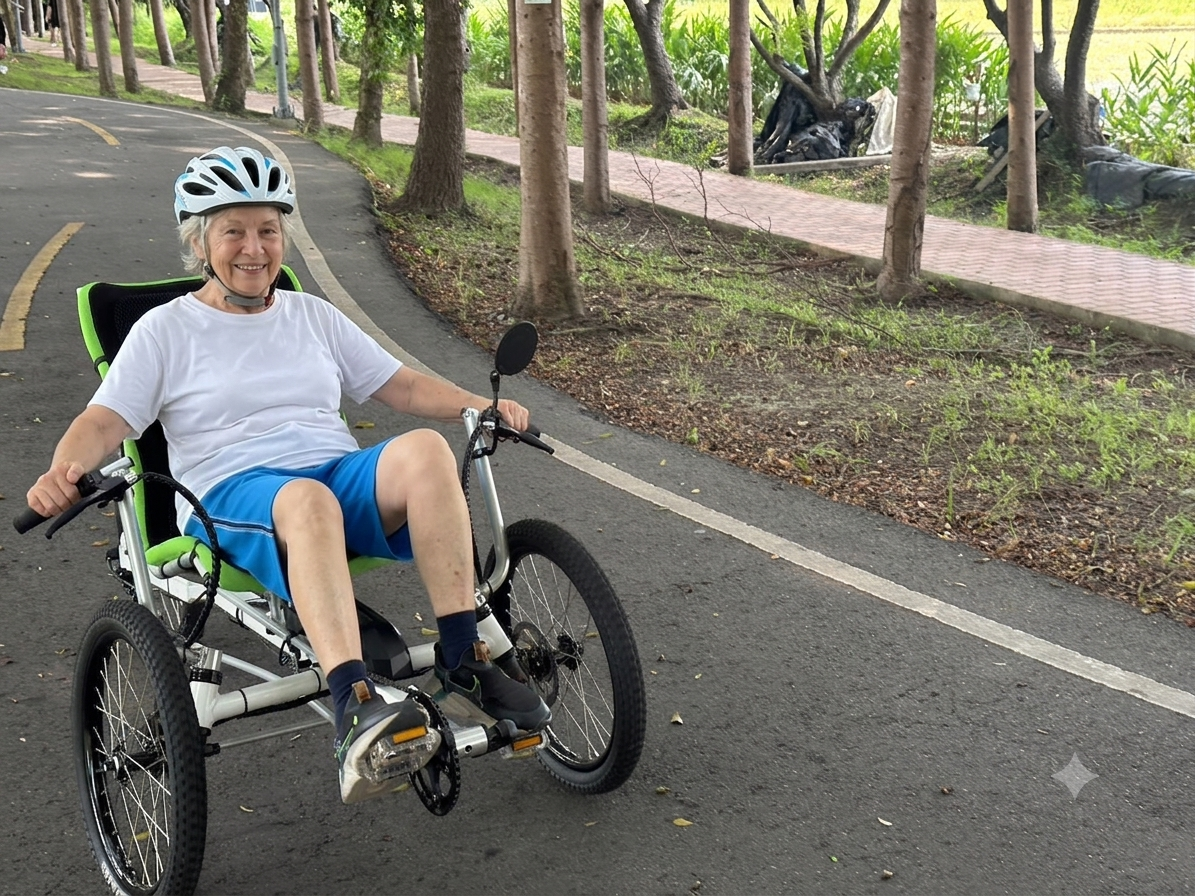
If you're looking for a workout that burns serious calories without destroying your joints, traditional high-impact exercises like running or heavy squatting might leave you feeling more sore than satisfied. Whether you are recovering from a knee injury, managing joint stiffness, or simply looking for a sustainable way to boost your cardiovascular health, daily recumbent trike riding offers the ultimate solution. Here is how a 30-minute daily session on an electric recumbent trike (e-trike) or standard recumbent bike delivers an effective, calorie-burning aerobic workout while protecting your knees.
1. The Science: Why Recumbent Riding is Kind to Your Knees
Traditional upright cycling forces your lower body to support both your pedaling effort and a portion of your weight during power output. Recumbent riding fundamentally changes the biomechanics of pedal movement.
Zero Weight-Bearing Strain on Joints
On a recumbent trike, your entire back, hips, and lower body are fully cradled by the ergonomic seat. Your knees do not carry your body weight, drastically reducing compressive force on the patellofemoral joint (the knee cap).
Smooth, Circular Kinetic Motion
Pedaling in a reclined position eliminates the harsh impact shocks caused by foot-strikes during running. The fluid, continuous circular motion lubricates the knee joint with synovial fluid, promoting recovery while building tissue strength.
Controlled Knee Flexion
By adjusting your boom (or frame reach) properly, you can ensure your knee maintains a healthy extension angle (around 10–15 degrees of bend at full extension), preventing over-flexion or hyperextension during pedaling.
2. Calorie Burning Power: Low Impact, High Output
A common myth is that low-impact riding yields lower workout intensity. Biomechanical studies show that pedaling against a seat back allows you to engage your glutes and quadriceps more directly, generating powerful resistance without straining your spine or joints.
A 150-pound rider can burn approximately 200 to 300 calories during a focused 30-minute recumbent workout, depending on speed and resistance levels.
The E-Assist Advantage for Joint Health
- Micro-Adjusted Intensity: Use lower pedal assist modes to keep your heart rate in the optimal fat-burning Zone 2 (60%–70% of max heart rate).
- Flattening Steep Hills: If a steep incline threatens to strain your knees, increase the pedal-assist level instantly to maintain a smooth, low-torque cadence.
- Recovery-Friendly Resistance: Electric assist lets you choose lighter gears without sacrificing speed, which is exactly what knee joints prefer.
3. The 30-Minute Joint-Friendly Recumbent Workout Plan
To maximize calorie burn while keeping joint stress near zero, follow this structured 30-minute routine 4 to 5 times a week.
- Warm-Up — 5 Minutes: Low resistance / high cadence (85–90 RPM). Goal: warm up knee synovial fluid and muscles.
- Steady Cardio — 15 Minutes: Moderate resistance / steady cadence (75–85 RPM). Goal: target Zone 2 heart rate for fat burn.
- Interval Boosts — 5 Minutes: 30-second higher resistance push / 60-second easy recovery. Goal: elevate metabolism and boost calorie burn.
- Cool-Down — 5 Minutes: Minimal resistance / easy spinning (70 RPM). Goal: flush lactic acid and ease heart rate.
Cadence Tip for Knee Safety
Always keep your cadence (revolutions per minute) relatively high (above 75 RPM). Spinning faster in lighter gears puts less strain on your knee joints than pushing hard in heavy gears.
4. Key Setup Tips to Protect Your Knees
To keep your daily ride completely pain-free, make sure your trike is dialed in to your body measurements.
- Check Leg Extension: When the pedal is at its furthest point, your leg should have a slight bend at the knee. If your leg locks out completely, you risk hyperextension. If your knee stays bent too much, it increases pressure behind the knee cap.
- Neutral Foot Placement: Position the balls of your feet comfortably over the center of the pedals. Using clipless pedals or heel-support straps helps prevent your feet from slipping, allowing smooth pedal strokes.
- Listen to Your Body: If you feel discomfort in the front of your knee, your seat might be too close to the pedals. If you feel strain in the back of your knee or hamstring, your seat may be too far back.
Final Thoughts: Fitness Without the Pain
You don't need to endure joint pain to achieve your fitness goals. Incorporating a 30-minute daily recumbent workout into your lifestyle provides a sustainable, high-efficiency cardio routine that keeps your heart strong, burns fat, and preserves your joint health for years to come.
Ready to start your pain-free fitness journey? Explore the ergonomic Ovelox Trikes lineup today and discover how comfortable staying active can be!
Ride the difference yourself
OVELOX is a low step-through electric recumbent trike built for comfort, stability and pain-free long rides — designed with seniors and pet families in mind.
Contact OVELOXKeep reading
How Cycling Can Become Part of Your Weekend Routine
Learn how to build a sustainable weekend cycling routine with an electric recumbent trike. Discover route ideas, distance goals, safety checklists, and tips for seniors, pet families, and active-aging riders.
Electric Trike vs Mobility Scooter: Which Is Better for Seniors?
Compare electric trikes and mobility scooters for seniors: stability, comfort, exercise, range, speed, terrain, cargo, storage, and everyday lifestyle. Find the right active mobility choice.