Recumbent Trike Touring: The Ultimate US Long-Distance Ride
Why recumbent trikes beat road bikes for US touring: zero back pain, tadpole stability on climbs, huge cargo capacity, and a safer 12-inch riding height.
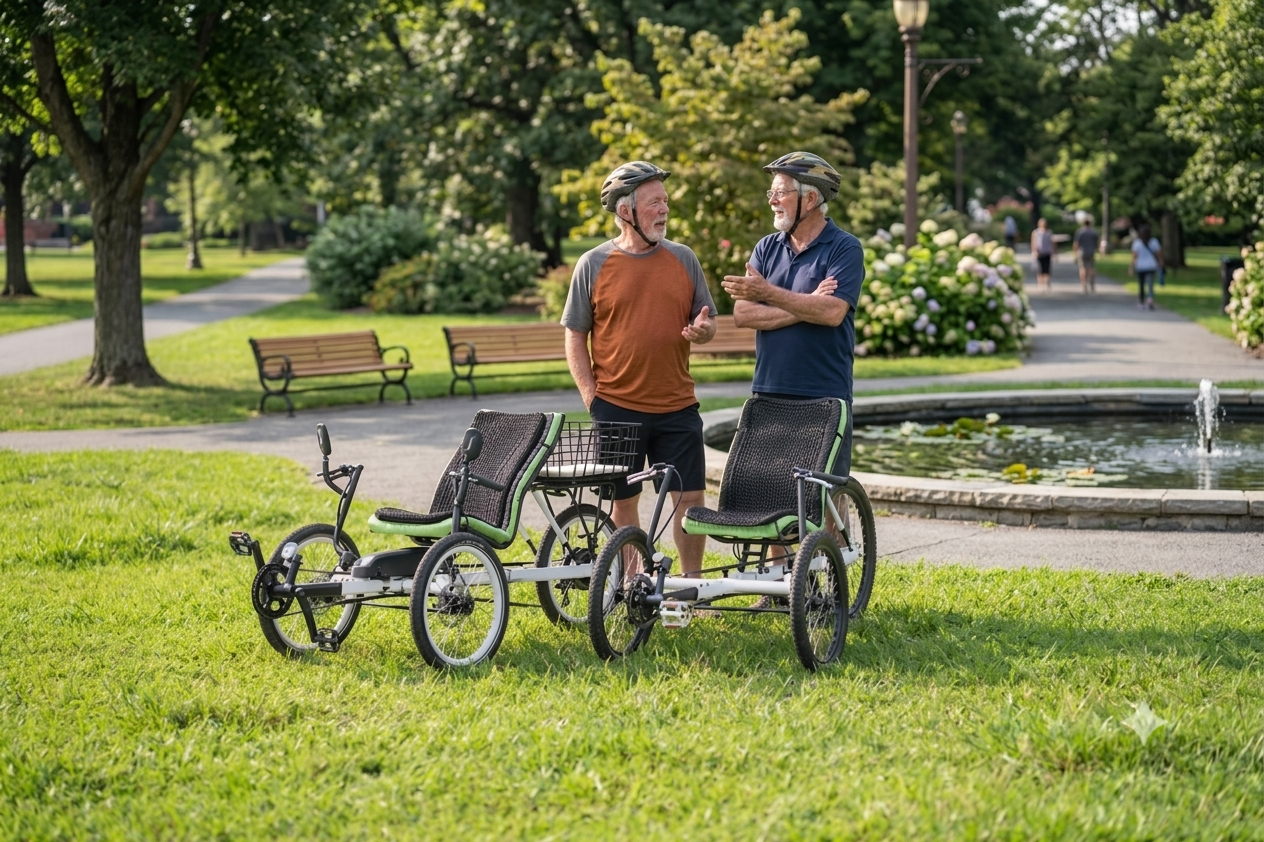
Have you ever finished an epic 60-mile century ride on a traditional upright road bike, only to spend the next three days recovering from excruciating lower back pain, a stiff neck, and saddle sores?
For most American cyclists, credit-card touring or bikepacking along the Great American Rail-Trail means grinning and bearing the physical toll of a standard diamond frame. But what if you could take your living room sofa, put it on three wheels, and cruise across the country with a panoramic, 180-degree view of the horizon?
Welcome to the world of recumbent trikes — where we trade the sufferfest for pure, unadulterated comfort at 12 inches off the ground.
The "Moving Sofa" Experience: Ergonomics That Save Your Tour
Let's be honest about traditional bike touring: your neck hurts from staring at the asphalt two feet in front of your front tire, your wrists are numb from supporting your upper body, and your nether regions are begging for mercy.
On a tadpole recumbent trike, your body is placed in an ergonomically engineered, reclined position.
- Zero Neck Strain: Your head rests naturally, looking straight ahead at the majestic views of the Pacific Coast Highway or the Blue Ridge Parkway.
- No Wrist Fatigue: Your hands drop naturally onto under-seat steering bars. No weight pressure, no carpal tunnel flare-ups.
- The Mesh Seat Advantage: Instead of a punishing leather saddle, you're cradled by a breathable mesh or hardshell seat that distributes your weight perfectly.
In the US recumbent community, we call this "cheating the wind" and "saving the spine." You can ride 100 miles and step off the trike ready to hike, not hunt for Ibuprofen.
Overcoming the "Trikes Can't Climb" Myth: The Mechanical Truth
One of the biggest questions we get in the US forums is: 'How do you climb steep mountain passes on a recumbent trike when you can't stand up on the pedals?'
Here is the secret weapon of recumbent trike touring: Zero-Speed Stability.
On a standard touring bike, if your speed drops below 4 mph on a grueling 12% grade, you lose balance and crash. On a three-wheel recumbent, balance is a non-issue. You can drop your drivetrain into a granny gear — or utilize a premium Shimano Nexus / Alfine internal gear hub or a Rohloff system — and spin up the mountain at 2 mph if you want.
Need a break halfway up a brutal Colorado pass? Don't unclip. Just lock your parking brakes, lean back, sip some water, eat an energy bar while completely stationary, and start pedaling again whenever you're ready. Trikes don't fall over.
Packing and Customizing Your Rig for Self-Supported Touring
American long-distance touring requires carrying serious gear, from bear canisters to lightweight tents. Due to the low center of gravity, a loaded trike handles better than an empty one.
When configuring your rig, weight distribution is key. Experienced riders utilize a combination of heavy-duty rear panniers and custom recumbent seat back bags that fit snugly behind the mesh frame. Because the luggage sits low and centered, it drastically improves cornering stability and traction, reducing aerodynamic drag compared to the massive sail effect of upright bike packing setups.
Furthermore, if you love bringing your furry co-pilot along, the low-end torque of a trike makes it the absolute best platform for pulling heavy pet bike trailers or heavy cargo loads across state lines.
The Reality of Trike Life in America: Transport & Visibility
We can't talk about trike touring in the US without addressing the practicalities. Yes, transport takes a little more planning. Whether you're loading it into the back of a Ford F-150, using a specialized hitch rack, or navigating Amtrak's checked bicycle policies, transport requires specific gear. But the payoff on the road is worth every square inch.
But are you worried cars won't see you?
It's the number one safety question. The reality? A 3-foot wide, alien-looking machine with a high-visibility safety flag and pulsing daytime running lights gets way more respect and passing clearance from American drivers than a standard cyclist ever will. You aren't just another bike on the shoulder; you are a distinct, highly visible vehicle.
The Verdict: Change Your Posture, Change Your World
Riding a recumbent trike isn't about giving up on performance; it's about choosing longevity, comfort, and a completely fresh perspective on the open road.
If you are tired of finishing your tours in pain, it might be time to lower your gaze to 12 inches off the ground and elevate your entire riding experience.
What's your take?
Are you considering making the switch from an upright touring bike to a recumbent trike for your next cross-country trip? If you're already a member of the "bent" community, what custom gear or drivetrain modifications are you running? Let us know in the comments below!
#RecumbentTrike #RecumbentBike #RecumbentLife #RecumbentCycling #ThreeWheelRecumbent #ElectricTrike #ElectricTricycle #ETrike #ElectricAssist #EBikeLife #PedalAssist
Ride the difference yourself
OVELOX is a low step-through electric recumbent trike built for comfort, stability and pain-free long rides — designed with seniors and pet families in mind.
Contact OVELOXKeep reading
How Cycling Can Become Part of Your Weekend Routine
Learn how to build a sustainable weekend cycling routine with an electric recumbent trike. Discover route ideas, distance goals, safety checklists, and tips for seniors, pet families, and active-aging riders.
Electric Trike vs Mobility Scooter: Which Is Better for Seniors?
Compare electric trikes and mobility scooters for seniors: stability, comfort, exercise, range, speed, terrain, cargo, storage, and everyday lifestyle. Find the right active mobility choice.